
Concrete · Light · Furniture Design
Custom Translucent Concrete Furniture: Concrete, Light and Function in One Object
Translucent concrete furniture combines a solid, mineral surface with an integrated lighting layer. When switched off, the pieces look like premium designer furniture made from concrete. As soon as light reaches the embedded fibres, points, lines, illuminated areas, patterns or logos become visible. The result is not furniture with a light fixture added afterwards, but an object in which material, function and lighting have been designed together from the start.
LUCEM develops bespoke translucent concrete furniture for reception areas, hospitality, retail, corporate interiors, wellness spaces and private interiors. Geometry, surface finish, lighting pattern, technical components and installation are planned to match the customer's individual requirements.

Direct Answer
What Makes Translucent Concrete Furniture Special
Translucent concrete furniture consists of furniture or furniture elements made from light-transmitting concrete. Optical fibres carry natural or artificial light through the material.
In furniture applications, the effect is usually created with LED backlighting. Without illumination, the concrete surface remains visible; when illuminated, the furniture becomes a lighting or brand object.
Technically, the material is not transparent but translucent: it is not see-through like glass, but integrated fibres allow light to travel through to the visible surface.
Four layers interact in furniture design: the concrete element, the fibre or motif pattern, the lighting and the load-bearing technical construction. Only when these layers are planned together can a uniform effect be achieved while ensuring that the technical components remain accessible later.
Independent material information: BauNetz Wissen · InformationsZentrum Beton
| Solution | Principle | Typical Effect |
|---|---|---|
| Conventional Concrete Furniture | Concrete surface without integrated light transmission | Form, texture and materiality |
| Conventional Illuminated Furniture | Light source usually made from plastic, glass or metal | Bright surfaces and direct lighting effects |
| Translucent Concrete Furniture | Mineral surface with light-transmitting fibres and backlighting | Concrete object by day, illuminated or branded object when lit |
Applications
What Types of Translucent Concrete Furniture Are Possible?
Translucent concrete is not limited to one standard piece of furniture. The key questions are what function the object needs to fulfil and which areas actually need to be illuminated. Visible fronts, panels, plinths or claddings are often made from translucent concrete and combined with a suitable furniture or metal construction.
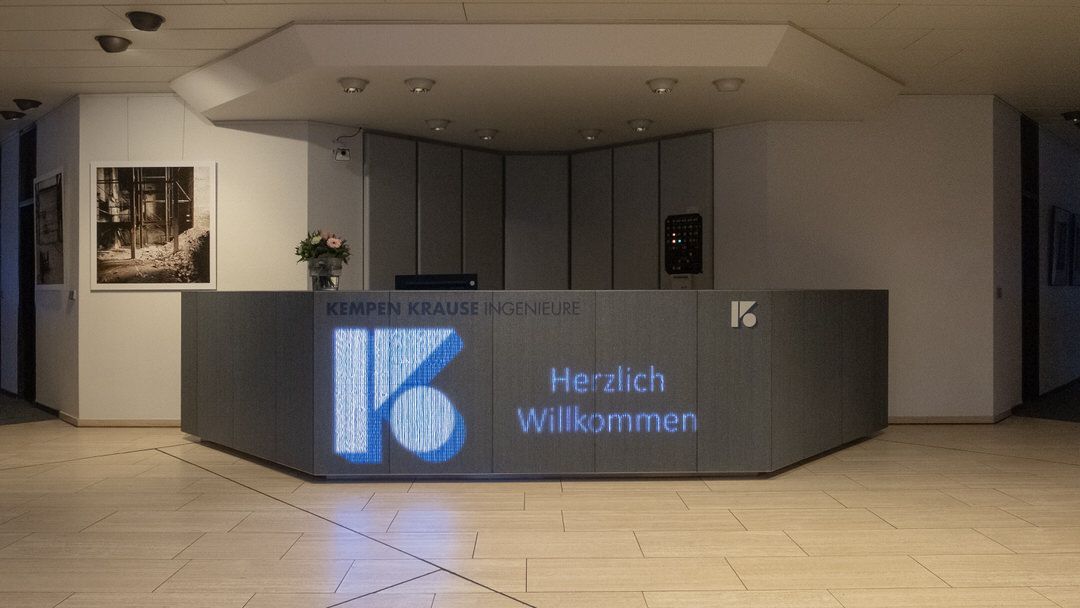
Reception Desks, Counters and Bars
Reception desks are among the most striking applications. During the day, a calm concrete front can appear refined and architectural; in the evening, points of light, lines or a logo can emerge.
At the same time, workstations, cables, storage, connections, corners and an accessible lighting cavity all need to be integrated.
Tables, Benches and Display Furniture
Possible applications include meeting and dining tables, side tables, benches, sideboards, plinths, shelving and display furniture. The light can appear in the tabletop, base, front panel or only within a specifically defined zone.
For large horizontal surfaces, spans, support structures, edge details, weight and transport should be considered early. The best solution is often a combination of translucent concrete with steel, aluminium, timber or glass.
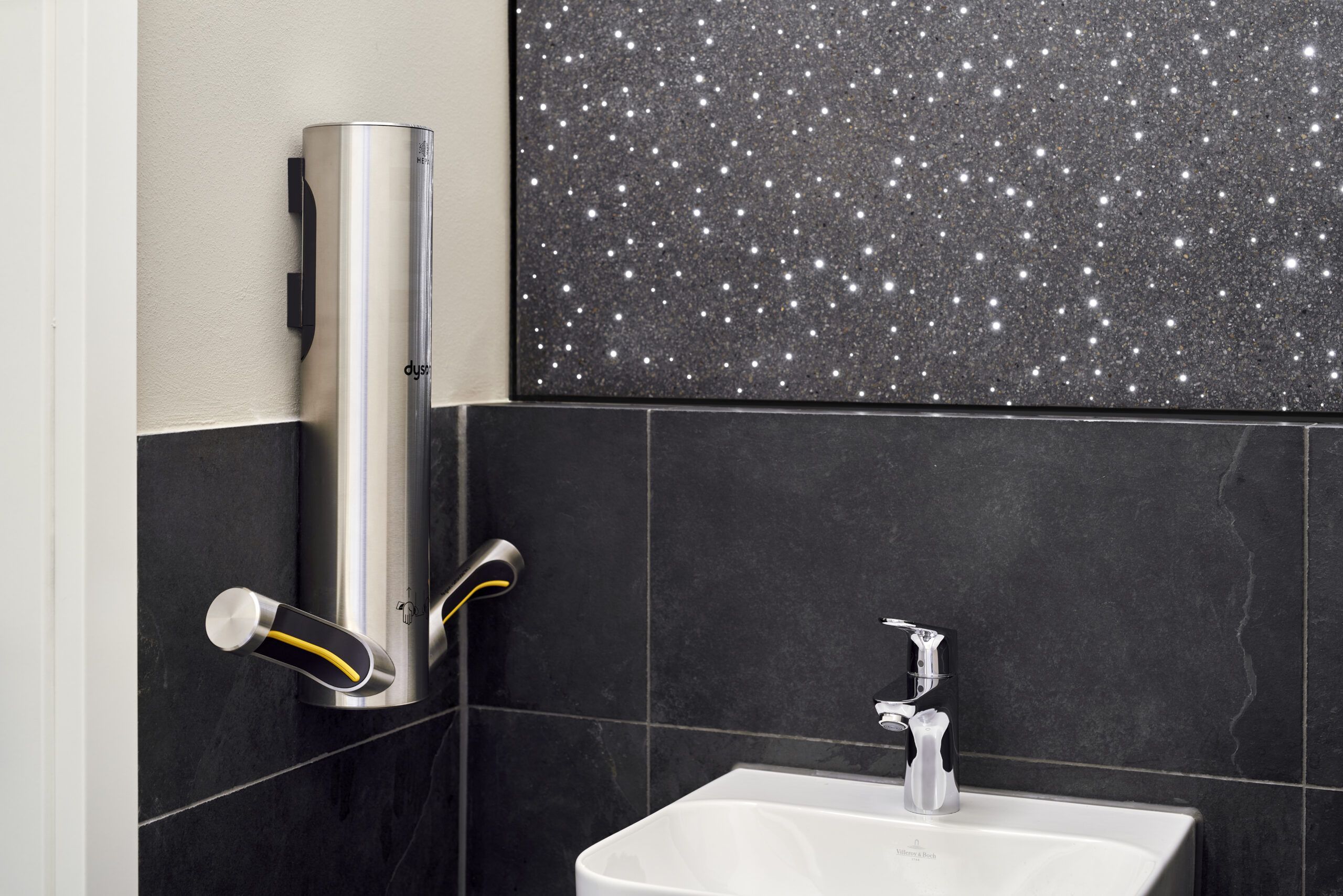
Translucent Concrete Washbasins and Custom Vanity Units
When people search for a translucent concrete washbasin, they are usually looking for a bespoke bathroom or vanity solution. Translucent concrete can be used for vanity tops, fronts, splashbacks, shower surfaces or cladding and combined with an integrated, countertop or wall-mounted basin.
Cut-outs, fittings, drainage, waterproofing, joints, cleaning and access to the LED technology all need to be planned together.

Custom Objects, Logos and Branded Furniture
In addition to their practical function, translucent concrete furniture can communicate a brand or create a distinctive spatial identity. Logos, lettering, pictograms, light lines and free-form patterns can be integrated directly into the visible surface.
For good legibility, motif size, viewing distance, fibre density, joint layout and lighting control need to be defined together.
Custom Solution
Designed to Customer Requirements
A bespoke solution does not start with a predefined model, but with the space, intended use and desired effect. The earlier design and technology are coordinated, the greater the flexibility in terms of form, budget and maintenance.
Geometry
Length, height, depth, radii, corners, cut-outs, panel divisions and joint layout.
Concrete Surface
Light, grey or anthracite tones as well as matt, smooth or project-specific surface finishes.
Lighting Pattern
Fine translucency, star-like points, lines, illuminated areas, logos, lettering or graphic motifs.
Lighting Technology
Warm white, neutral white, RGB/RGBW, dimmable, static or dynamically controlled.
Material Mix
Combination with metal, timber, glass, stone, fittings and conventional furniture construction.
Technical Integration
Substructure, power supplies, controls, cables, ventilation, fixings and maintenance access.
Samples Provide Planning Certainty
Concrete colour, surface texture, fibre pattern and colour temperature look different in the real space than they do on a screen. Particularly for logos, special colours, corner details and dynamic lighting, a sample or mock-up allows the effect to be assessed early.
Project Process
From Initial Idea to Finished Translucent Concrete Furniture
Translucent concrete furniture sits at the intersection of architecture, furniture construction, lighting design, electrical engineering and installation. A clear process prevents cables, power supplies, fixings or maintenance openings from only being considered afterwards.
Project BriefingApplication, function, dimensions, desired effect, budget and schedule are clarified.
Design ConceptForm, illuminated zones, material variant, surface finish, light colour and possible motifs are defined.
Technical CoordinationSubstructure, weight, fixings, power supply, controls, cut-outs and maintenance access are planned.
Sample or Mock-UpSurface, fibre pattern, light intensity and details are reviewed using a sample.
Production and Pre-AssemblyConcrete elements, lighting technology and construction components are produced, tested and pre-assembled where appropriate.
Delivery and InstallationTransport, installation, connections, commissioning and handover are coordinated with the site conditions.
For a reliable initial assessment, send us a sketch or visual, approximate dimensions, the intended location, the desired lighting effect and a budget range. This makes it possible to determine early which custom solution makes sense.
Application Area
Translucent Concrete Furniture for Interior and Exterior Applications
Depending on the product variant and system design, translucent concrete can be used both indoors and outdoors. For exterior applications, however, simply selecting a durable concrete element is not enough. The entire system, including LEDs, connections, substructure and drainage, must be designed for the environmental conditions.
| Application | Issues to Clarify Early |
|---|---|
| Interior | Ambient lighting and glare, cable routes, power supplies, fire protection requirements, cleaning, acoustics, furniture interfaces and maintenance access. |
| Exterior | Weather exposure, frost, UV exposure, drainage, suitable protection rating for lighting technology, corrosion-resistant substructure, temperature and maintenance. |
| Bathroom / Wellness | Moisture, splash water, waterproofing, joints, cleaning agents, fittings, drainage and separation of water and electrical systems. |
The overview of translucent concrete applications provides further inspiration for corporate spaces, spas, public areas and architectural surfaces.
Technical Planning
What Matters for Technology, Installation and Maintenance
Convincing translucent concrete furniture needs to do more than work on day one. The construction and technology should be designed so that operation, cleaning and maintenance remain possible over the long term.
Suitable technical documents, care instructions and further information are available in the LUCEM download section.
Budget Guidance
How Much Does Translucent Concrete Furniture Cost?
Translucent concrete furniture is a bespoke project solution and cannot meaningfully be described using a single unit or square-metre price. Costs depend on the material variant, proportion of illuminated surface, geometry, cut-outs, surface finish, LED technology, controls, substructure, furniture integration, transport and installation.
Depending on the material variant, fibre density, dimensions, cut-outs, surface finish and illuminated proportion.
As a rough guide for around three workstations – depending on geometry, front surfaces, connections, lighting and furniture integration.
Depending on custom dimensions, cut-outs, surface finish, lighting and installation conditions.
These figures provide rough budget guidance and do not replace an individual quotation. Further details are available in the LUCEM guide to translucent concrete pricing.
How to Manage the Budget Effectively

Project Expertise
Why Choose LUCEM for Custom Translucent Concrete Furniture?
With translucent concrete furniture, the concrete panel alone does not determine the result. Material, fibre pattern, lighting, fixings and furniture integration all need to work together. LUCEM combines these disciplines into one project-specific solution.
LUCEM was founded in 2007 as a spin-off from RWTH Aachen University. According to the company, more than 600 projects have now been completed worldwide. The work combines design, engineering expertise, craftsmanship, lighting technology and fixing systems.
Hand-finished surfaces and individually customised products enable solutions for corporate environments, hospitality, façades, spas and both interior and exterior applications.
Learn more about our approach and background on the About LUCEM page. Specific applications can be found in our selection of LUCEM projects.
Turn Your Idea into a Custom Translucent Concrete Solution
Whether you are planning a reception desk, table, vanity, bench or completely bespoke furniture object, send us the intended location, dimensions, design concept and budget range. On this basis, we can assess the material, lighting pattern, construction and next planning steps.
Frequently Asked Questions
FAQ About Translucent Concrete Furniture
What is translucent concrete furniture?
Translucent concrete furniture consists of custom-made furniture or furniture elements made from light-transmitting concrete. Optical fibres carry light through the material so that points, lines, illuminated areas, patterns or logos become visible when the element is backlit.
How does translucent concrete furniture work?
Optical fibres run through the concrete element and transmit light from the rear to the visible surface. LED backlighting is usually used to create the desired effect. Without illumination, the mineral concrete surface remains visible.
What types of furniture can be made from translucent concrete?
Typical applications include reception desks, bar counters, tables, benches, sideboards, display furniture, plinths, vanity units and individually developed lighting objects. Feasibility depends on the geometry, construction and installation conditions.
Can a logo be integrated into translucent concrete?
Yes. Logos, lettering, symbols and graphic motifs can be planned as defined points or illuminated areas. For a clean result, viewing distance, fibre pattern, panel layout and lighting need to be developed together.
What is the difference compared with conventional concrete furniture?
Conventional concrete furniture is primarily defined by its form, mass and surface finish. Translucent concrete adds an integrated lighting layer. When switched off, the furniture looks like a premium concrete object; when illuminated, it becomes a lighting or brand object.
Are custom dimensions and shapes possible?
Yes. Dimensions, geometry, cut-outs, edges, concrete colour, surface finish and lighting effects can all be adapted to the project. Technical limits are determined by structural requirements, weight, manufacturing, transport, installation and maintenance access.
Is translucent concrete furniture suitable for outdoor use?
Exterior applications are possible with suitable material variants and a coordinated system design. The substructure, drainage, LED protection, connections, frost resistance and weather exposure must be assessed for the specific project.
How is the LED technology maintained?
The lighting should remain accessible through a removable rear panel, maintenance opening or detachable components. Drivers, controls, cable routes, heat dissipation and replaceability are therefore considered during the furniture planning stage.
How much does translucent concrete furniture cost?
Costs depend on size, material variant, illuminated proportion, geometry, surface finish, LED technology, substructure and installation. As a rough guide, LUCEM quotes approximately €15,000 to €30,000 for a reception counter with around three workstations and from approximately €1,000 for a vanity top. An individual quotation is still required.
How can a translucent concrete washbasin be designed?
In bathrooms, translucent concrete is often used as a vanity top, front, splashback or cladding and combined with an integrated, countertop or wall-mounted basin. Cut-outs, fittings, waterproofing, cleaning and maintenance access are planned on a project-specific basis.