
Concrete · Light · Digital Control
Media Facade Made of Translucent Concrete: Architecture Goes Digital
A media facade turns a building envelope into a controllable surface for light and communication. With our solution, this function is not added in front of the architecture as a visible screen. It is integrated into a mineral concrete surface.
When switched off, the surface appears as a premium concrete or architectural surface. When activated, points of light, lettering, symbols, patterns and animations become visible. The media facade therefore combines materiality, light art and digital communication – especially where the visual language of a conventional LED screen is not desired.

Definition and Comparison
What Is a Media Facade?
A media facade extends the conventional building envelope with a visual and communicative function. It can display information, brand messages, artistic content or lighting scenarios that respond to events.
| System | Appearance When Switched Off | Typical Media Effect | Architectural Integration |
|---|---|---|---|
| Conventional LED Screen | Dark or technical display surface | High resolution, video, advertising and live content | The media surface usually remains clearly visible |
| LED Mesh or Metal Mesh | Transparent or metallic grid | Graphics, animation and video viewed from a greater distance | Lightweight and transparent, but visibly technical |
| LUCEM Translucent Concrete | Premium mineral concrete surface | Points of light, text, patterns and abstract animations | The media function becomes part of the material surface |
The key question is not only: “What should be displayed?” Just as important is: “How should the surface look when no content is running?” A technical overview of media facades and their planning considerations is also available from BauNetz Wissen.
Our Principle
Media Facade Made of Translucent Concrete: One Surface, Two Effects
We combine concrete as a permanent facade and wall material with digitally controllable light. The media function is not added later as a foreign element.
Materiality Remains in the Foreground
Color, texture, panel format and joint layout are coordinated with the architectural concept. Without active media content, the result is a calm, premium concrete surface.
The Concrete Surface Becomes a Digital Facade
Points of light can be controlled individually or in groups. The grid can create logos, lettering, motion patterns, light gradients or abstract image sequences.
Digital Concrete
No Added-On Screen Aesthetic
Digital Concrete describes the combination of a mineral building material with a programmable visual layer. Concrete remains the defining material, while light adds time, movement and information.
Surface, format, joint pattern, lighting structure, substructure and control system are planned as one integrated architectural solution.
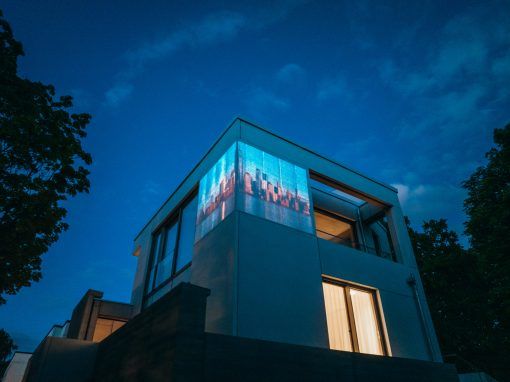
The LUCEM Digital Facade in Hamburg demonstrates this dual effect. Its content is managed through a web-based control system and can be updated for the project as needed.
Media Design
What Content Works for a Media Facade?
A media facade made of translucent concrete does not need to imitate the resolution of a video screen. Its strength lies in a clear, reduced visual language that remains legible from greater distances.
Animations
Abstract sequences, rhythmic patterns and slow movement.
Branding
Logos, symbols, brand marks and clearly recognizable graphic forms.
Typography
Short messages, wayfinding, names and recurring information.
Light Gradients
Atmospheric color changes, calm transitions and lighting compositions.
Nature Motifs
Water, wind, movement and organically evolving visual sequences.
Generative Art
Programmable patterns that evolve according to defined rules.
Interaction
Lighting scenarios that respond to sensors, movement or approved data.
Wayfinding
Signals, zones, event information and recurring events.
Develop Content, Grid and Architecture Together
Pixel spacing, facade size, viewing angle and viewing distance determine which motifs work. Short text, strong contours and slow movements generally remain more legible than small details or fast video sequences.
Media Control
Intelligent Control for Dynamic and Interactive Facades
Content can change over time or respond to defined events. The key is a control concept that matches how the building is used.
The media layer activates depending on the time of day or ambient light.
Art, brand communication or seasonal content runs according to schedule.
Light intensity and motion dynamics are adjusted to the surroundings.
Approved programs accompany events or special occasions.
Movement, presence or selected environmental data can influence lighting scenarios.
Scheduled pauses preserve the architectural effect of the calm concrete surface.
Depending on the project, options include web-based operation, local media servers, schedules, sensors and interfaces to building or lighting control systems. Access rights, approvals, data security, emergency states and manual overrides should be defined during the planning phase.
Material-Based Media Architecture
Benefits of a LUCEM Media Facade
Our solution combines the requirements of an architectural surface with the possibilities of digital light communication.
Premium Appearance at Rest
The architectural surface and media surface can be identical. Even without active content, a designed concrete surface remains visible.
Material Instead of Display
Concrete remains the defining, robust design material. The lighting technology expands the surface without replacing its material character.
Changeable Content
Lighting programs, logos, patterns and animations can be programmed and updated according to the project.
Custom Design
Color, texture, format, joint layout, grid and geometric arrangement are coordinated with the concept.
Designed for Distance
Greater viewing distances are treated not as a limitation, but as part of a deliberately reduced visual language.
Versatile Applications
Interior and exterior applications, light art, branding and wayfinding are possible depending on the specific system design.
Decision Guide
Media Facade or Conventional LED Screen?
Both systems have valid applications. The choice should be based on the architectural task and the type of content required.
A Conventional LED Screen Is the Better Choice When …
- high-resolution video and detailed product imagery are the main focus,
- live broadcasts or conventional display content need to be shown,
- frequently changing advertising content requires high image resolution,
- a visible screen aesthetic is acceptable as part of the concept.
LUCEM Translucent Concrete Is the Better Choice When …
- the concrete surface must have a strong architectural presence during the day,
- the media function should not appear as an added-on display,
- logos, text, patterns or abstract animations are sufficient,
- light art and architectural lighting are more important than a screen aesthetic,
- the building should only become media-active at selected times.
Translucent concrete does not replace every LED screen. It creates a different category: a media-enabled architectural surface whose material character remains intact even without power or content.
Interior and Exterior
Applications for Digital Concrete and LED Wall Cladding
LUCEM can be used as a large-scale media facade, an accentuated facade zone or LED wall cladding. The specific system design depends on location, format, lighting technology and structural requirements.
Digital Facade
During the day, the surface appears as a clean concrete facade. As dusk begins, artwork, messages and moving light content become visible. The content is managed through a web-based system.

Digital Concrete at Haus Matthéy
App-based content control is combined with anthracite LUCEM panels. The project demonstrates how digital content can be integrated into a specific interior architecture.
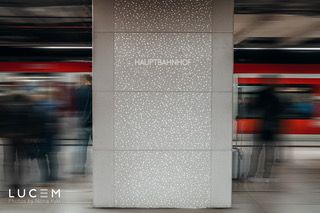
Wayfinding in Transit Spaces
In stations, passageways and mobility environments, illuminated wall cladding can combine atmosphere, identity and wayfinding.
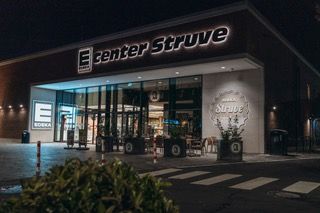
Illuminated Logo Integrated into the Facade
Selected facade zones can also be used as media surfaces. Integrated logos, lettering and symbols create recognition without turning the entire building envelope into a screen.
Plan Early
What Matters When Planning a Media Facade
A convincing media facade is created through the interaction of material, construction, lighting technology, control and content.
The most important decisions should not be postponed until after installation. Purpose, typical viewing distance, operating model, desired motifs, concrete surface and technical accessibility all influence one another.
Samples, mock-ups and content tests show early on how concrete color, light intensity, grid and viewing distance work together. This helps prevent content from appearing too detailed, too fast or too bright later on.
What Is the Purpose of the Surface?
Should it make a brand visible, present art, provide wayfinding, support events or create atmospheric light? Equally important: Who will create and approve the content later?
From What Distance Will the Surface Be Viewed?
A facade viewed from 80 meters requires a different visual language than a wall in a foyer. Architectural views, circulation routes, sight lines and motifs need to work together.
How Should the Surface Look in Daylight?
Color, texture, panel size and joint layout shape the architecture even without illumination. They are coordinated with the light points and substructure.
How Much Light Is Actually Needed?
More brightness is not automatically better. Ambient light, operating times, motion dynamics, light spill and potential glare should be assessed early.
How Will the Technology and Substructure Remain Accessible?
For exterior applications, drainage, temperature, moisture, wind loads, fixing and maintenance access are among the factors that must be considered for the specific project.
How Will Content Be Managed Securely?
Schedules, web-based operation, media servers, sensors, access rights, emergency states and manual overrides are defined to match the operating model.
Further Information: German Environment Agency on Artificial Light · BAuA on Lighting, Reflections and Glare
Project-specific approvals and local requirements must be coordinated with the responsible planners and authorities. Protection ratings, technical performance data, system limits and maintenance intervals depend on the specific design.

Project Expertise
Concrete, Light and Project Expertise from a Single Source
Since 2007, we have been developing translucent concrete together with matching lighting and fixing systems. LUCEM began as a spin-off from RWTH Aachen University and has since realized more than 600 projects worldwide.
Our work combines development, design, engineering expertise and handcrafted surface finishing. A team of 15 specialists develops custom solutions for architecture, interiors, facades and light communication.
We have been working with Holcim Germany since 2019. We are also continuously developing material circularity: used panels can be processed so that light-conducting and mineral components can be reused.
Are You Planning a Media Facade or a Media-Enabled Concrete Wall?
Together, we define area, visual effect, viewing distance, grid, lighting technology, construction and content. This provides the basis for an initial realistic project concept.
Frequently Asked Questions
Media Facade FAQ
What Is a Media Facade?
A media facade is a building or wall surface that can display visual content in addition to its architectural function. Depending on the system, it can show points of light, text, graphics, animations, video or interactive responses.
How Does LUCEM Differ from a Conventional LED Media Facade?
With LUCEM, the media function is integrated into a mineral concrete surface. When switched off, a premium architectural surface remains visible. A conventional LED screen, by contrast, usually still looks like a technical display surface even when no content is shown.
What Content Can Be Displayed on Translucent Concrete?
Logos, short text, symbols, light gradients, abstract animations, nature and movement motifs, generative art and interactive lighting patterns are particularly suitable. What can be displayed in practice depends on the grid, surface area and viewing distance.
Can a Translucent Concrete Media Facade Show Video?
Moving image sequences are possible, but their effect differs from a high-resolution screen. Translucent concrete is particularly suited to reduced, graphic animations that remain legible from a distance. Detailed video content should be tested in advance using the actual grid.
Is the Solution Suitable for Interior and Exterior Applications?
Interior and exterior applications are possible depending on the specific system design. Construction, fixing, weather protection, drainage, temperature, maintenance access and technical components are planned for the individual project.
How Is a Dynamic Facade Controlled?
Content can be played through a media control system according to time or events. Depending on the project, web-based operation, schedules, media servers, sensors and interfaces to building or lighting control systems are possible.
Can the Media Facade Respond Interactively?
Yes. An interactive facade can respond to defined sensor values, movement, events or selected data. The response logic, approval process and data protection requirements must be defined in the content and control concept.
When Should the Media Facade Be Included in the Planning Process?
Ideally, coordination begins during an early design or execution phase. This allows the concrete surface, panel formats, joints, substructure, cabling, maintenance access, lighting technology and content to be developed as one integrated system.
Free Concept
How Can Your Concrete Surface Become a Media-Enabled Architectural Surface?
Send us the area, application, typical viewing distance, desired content and initial sketches or plans. We will assess which material, lighting and control solution fits your project.
Book a Meeting and Request a Concept